Welcome to the Finger Lakes! Our theme song:


In a town this size, there's no place to hide
Everywhere you go, you meet someone you know...
In a smokey bar, in the backseat of your car
In your own little house, someone's sure to find you out
What you do and what you think
What you eat and what you drink...

(Kieran Kane)

Showing posts with label New York Business. Show all posts

Wednesday, July 18, 2012

DiNapoli to audit Thruway?

Gov. and Mrs. Dewey open Thruway, 1954

While many Upstaters consider New York's economy already dead, billionaire Cuomo donor and Thruway honcho Howard Milstein wants to bury the corpse six feet deeper.  Milstein, an influence-buying  Manhattan tycoon, wants to raise Thruway truck tolls by a "modest" 45 percent.  While we suspect Milstein, Cuomo and their jet-setting pals could care less that about that massive increase in business costs, every penny of which will ultimately be paid by consumers, a handful of drowning New Yorkers are sending up a warning flare.
A major state business group is demanding a thorough audit of the state Thruway Authority before it raises tolls by what the authority called a "modest" 45 percent for larger trucks.
"We will all pay the price for this toll hike if we don't stand up and demand that the Thruway review its own finances before taking money from the rest of us," said Brian Sampson, executive director of Unshackle Upstate.
The toll increase on trucks with three or more axles would threaten distribution jobs and increase the costs of food, clothing and other articles hauled by trucks while slowing New York's "tenuous" economic recovery, he said Tuesday.
In what may turn out to be nothing more that a political smokescreen, Democrat New York state comptroller Tom DiNapoli  is hinting he may just audit the bloated Thruway Authority's books.
State Comptroller Thomas DiNapoli opened the door to possibly auditing the Thruway Authority's financial books Tuesday as the agency seeks to push through a controversial 45 percent toll hike on trucks.
The comptroller said the agency failed to thoroughly implement many of the recommendations he made in 2009 when it pushed through a previous toll increase. Had the findings from that audit been followed, he said, "many of the same problems that exist today would have been addressed.''
"Our Thruway system helps sustain the upstate economy. Increasing tolls could have a negative impact on our fragile economic recovery and hurt small businesses and consumers,'' the comptroller warned.
Bold added.  A few surviving Upstate residents may recall that Thruway tolls were supposed to disappear when the bonds were paid off in 1996.
The Thruway was built beginning in the 1950s and tolls were supposed to have paid off the superhighway in 1996.
 Ah, yes, 1996:

Friday, June 15, 2012

Long Island has better looking McDonald's


Yes, it's a McDonald's.  From Scouting New York:
McDonalds purchased the property with the intention of tearing it down and replacing it with a standard McDonald’s restaurant. Thank God for the citizens of the New Hyde Park, who worked to secure landmark status for the building in 1987.
McDonald’s had no choice but to restore the property and work within the parameters of the landmarks commission, which ultimately resulted in their most beautiful restaurant in America (if you know of a better example, please let me know).

Thursday, April 26, 2012

Cuomo confused by Econ 101

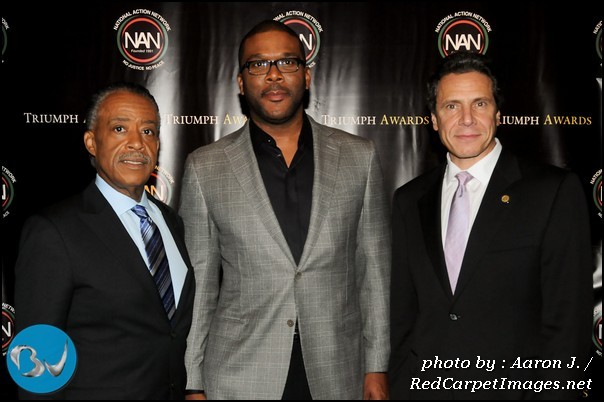
Andy Cuomo poses with pal Al Sharpton

2016 Democrat presidential candidacy front-runner Andy Cuomo appears to believe that an increase in New York's minimum wage will both decrease and increase employment, at the same time, in the financially struggling Empire State.
Gov. Cuomo played footsie with a possible minimum- wage increase yesterday, calling a hike a potential job-creator.
He acknowledged the argument of Senate Majority Leader Dean Skelos and other opponents that an increase could lead small businesses to cut jobs — especially for young, less-skilled workers.
But, he told reporters at the Capitol, “As a general rule, I don’t believe [increasing] the minimum wage costs jobs if it’s an intelligent increase. I believe it can create jobs, as a matter of fact, and create spending. The question becomes, what numbers?”
While we're at it, why don't we raise taxes again?  That should encourage more business to relocate here, right?

Increasing the cost of entry-level employees will result in fewer employment opportunities for the youngest, least skilled New Yorkers.  Candidate Cuomo needs to read up on basic economics.

Monday, March 5, 2012

Who invented the personal computer?

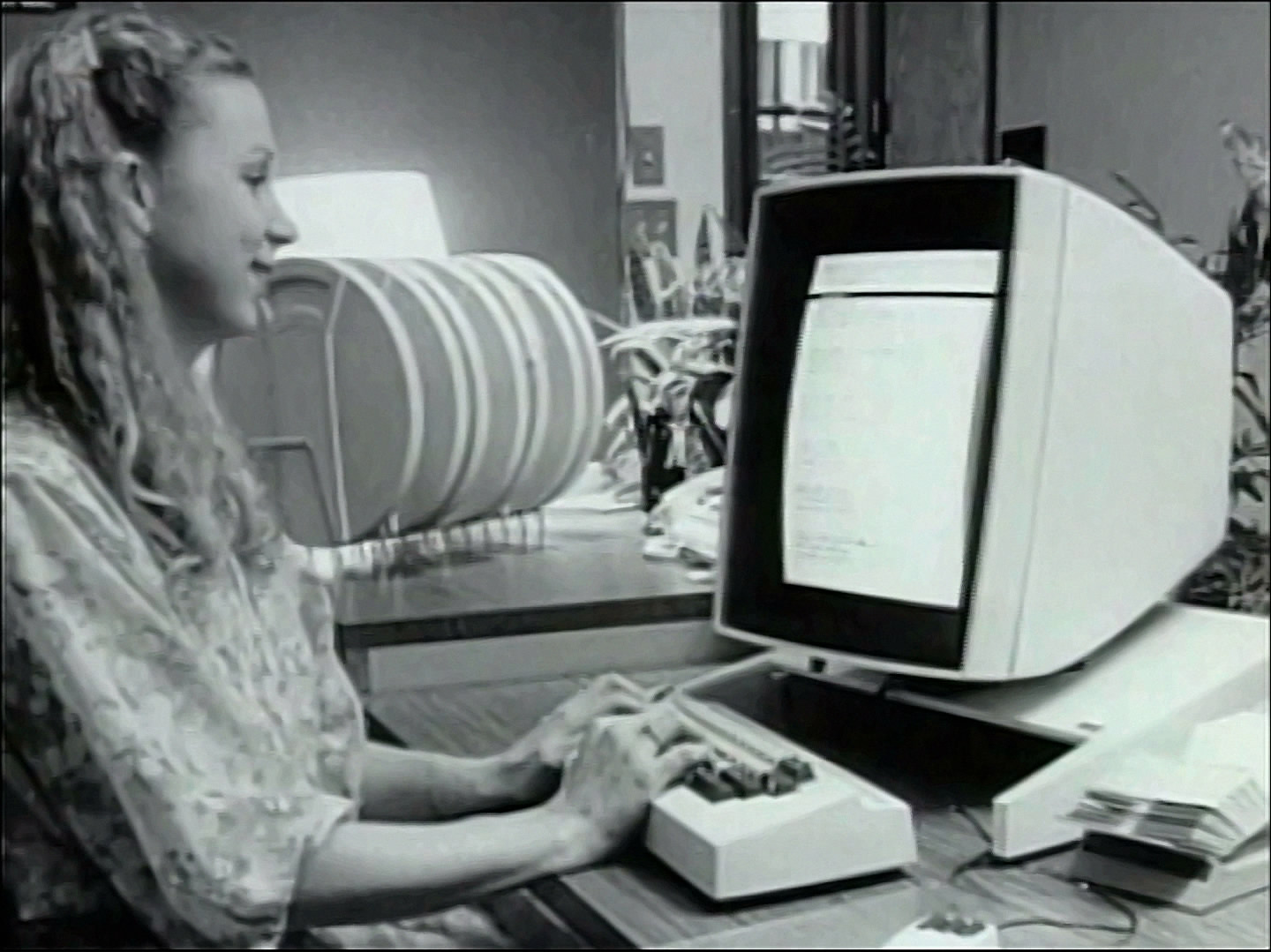
Xerox Alto, with mouse and Rolodex, early seventies.

Who came up with the first personal computer?  The first graphic interface?  The first computer mouse?  The first ethernet network?  Was it Steve Jobs?  Bill Gates?  A team of  faceless Japanese engineers?  No, it was formerly Rochester, NY based Xerox Corporation.
In the sixties and seventies Xerox’s Palo Alto Research Company (PARC) invented just about everything you can imagine. That includes what was recognized as the first true PC – The Xerox Alto… This sucker had everything, Ethernet networking, graphical user interface, icons, bit mapping, scalable type, a mouse, the world’s first laser printer, hot and cold running water, a back scratcher (OK, just kidding on the last two.)
So why didn't we ever see Altos in every business, school, house, tent and mud hut aound the globe, like the more successful "micro computers?" we've come to know and love?  George Parker explains:
It was years ahead of its time. So what did Xerox management do with it? Not a god damn thing. They were too busy counting the money rolling in every time someone used a 914, ‘cos you couldn’t buy one, you had to lease it and pay for every copy you made. The thing was a gold mine for years until the patents finally ran out.
As everyone knows, the main beneficiary of all the incredible stuff coming out of PARC was Steve Jobs, ‘cos in its infinite wisdom, Xerox gave the King of Apple a conducted tour of PARC, showing him everything they were up to, even watching him as he made notes of everything he was shown. Within months he had hired away some of PARCS top talent and instituted a program that resulted in the Lisa, the forerunner of the Mac, which I worked on before most of you were born!
The "914" was an early Xerox office copy machine, which generated so much revenue that Xerox saw no reason to exploit its later invention.  Why, that sounds just like that another Rochester industrial giant, now bankrupt, which invented digital photography - Eastman Kodak.

Friday, March 2, 2012

Kodak selling online services to Shutterfly


Rochester's bankrupt Eastman Kodak Company is reported to be in the process of selling is online photo services business, Kodak Gallery, to competitor Shutterfly.
Eastman Kodak Co has agreed to sell its online photo services business to Shutterfly Inc for $23.8 million, kicking off the bankrupt photography pioneer's relaunch as a much slimmer company although a patent sale seen crucial to its turnaround may still be months away.
The once-iconic company that invented the hand-held camera has said it will quit the camera business and is expected to fetch $1 billion to $2 billion from the sale of about 1,100 digital patents, which is due to get under way by June 30.
After dominating Upstate's industrial landscape for more that 100 years, Eastman is now forced to surrender it's still-viable photo printing business to what was, only a few years ago, a tiny start-up that no one at Kodak Park had ever heard of.  While Kodak management was out spending their annual bonuses on Buicks and swimming pools, a few techies in California were thinking ahead.
Shutterfly was founded in 1999 by two employees of Silicon Graphics – Eva Manolis and Dan Baum. Eva was a product person and Dan was a technology person. They teamed up and asked Jim Clark to fund it, which he did...
The vision at the time was that people were starting to buy these new things called digital cameras, but their pictures were stuck in them. They created a site that allowed people to get their pictures out of the camera, literally. Their early adopters where white men, technofiles, spending $2,000 for a 1-2 Mega Pixel camera. That was in 1999. They started programming in April, and the site launched on December 11, 1999.
 More on Kodak's digital photography history here.

Thursday, February 9, 2012

Kodak makes its last camera


Rochester's Eastman Kodak Company introduced its first daylight loading camera in 1891.  Today, Upstate New York's former industrial giant, now bankrupt, announced that it will end camera production.

For generations of New York politicians and business "leaders," who've told us the solution to our economic collapse is more of the same, then more of the same, then even billions more of the same, we'd hope Kodak's historic collapse will ring a bell.  At least, take Kodak's name off the list of  politically connected crony corporations we're supposed to follow into the promised land.


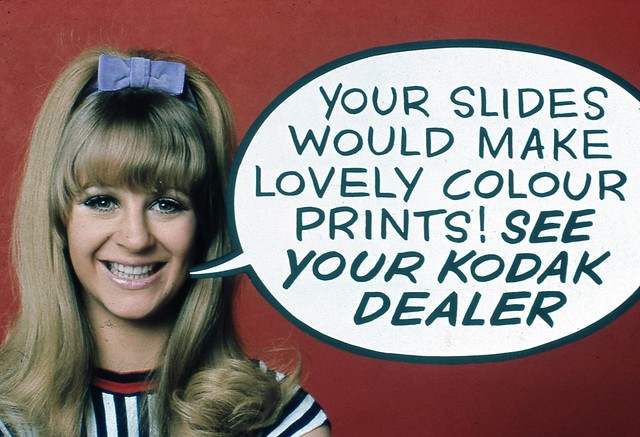
Opie gets a Kodak

Friday, January 20, 2012

Kodak introduces digital photography..

The future was in their hands

...in 1995.  In this photo, Kodak staffers demonstrate digital photography at a press conference in San Francisco on March 28 of that year.  The basic technology behind digital photography was developed at Kodak in 1975.

Kodak had a fast break opportunity with digital imaging, but threw the ball away. Check out the rise and fall of the Big Yellow Box at ExtremeTech.

Kodak: world's first digital SLR, 1991

Thursday, January 19, 2012

Kodak bankrupt


Eastman Kodak Company has finally pulled the trigger.
"After considering the advantages of Chapter 11 at this time, the board of directors and the entire senior management team unanimously believe that this is a necessary step and the right thing to do for the future of Kodak," CEO Antonio M. Perez said in announcing the decision.

The filing listed assets of $5.1 billion and debts of $6.75 billion...

As of a year ago, Kodak had 7,100 employees in the Rochester area and 18,800 companywide. The worldwide figure is now 17,000, the company said in its bankruptcy papers, about 8,000 of them in the U.S. It did not give a new Rochester-area figure.
At its peak in the early 1980s, the company employed 62,000 people in Rochester and 130,000 worldwide.
Under Perez's enlightened stewardship, Kodak's stock price dropped from $25/share to bupkes.  One would assume Mr. Perez had his hands full getting ready for a big garage sale at Kodak Park, but the Spanish-born business genius still has enough free time to serve on something called "President Barack Obama’s Council on Jobs and Competitiveness."

Tuesday, January 17, 2012

Barfrack and Wafflin' Andy

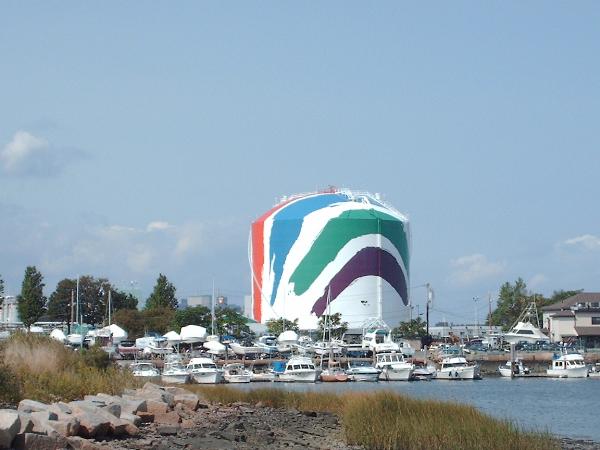
Famous natural gas storage tank, Boston, MA

Two of our wealthy career politician rulers have suddenly switched sides on shale gas recovery.  America's most anti-energy president has suddenly become Barfrack Obama.
The Wall Street Journal has an opinion column noting that Barack Obama has done an about face and now seems to be boosting the prospects of natural gas (especially that derived from shale gas fields). The White House has released a report that notes the important role that shale gas has played in helping to spark job and industrial growth. The White House mentions the Marcellus Shale in Pennsylvania as playing an especially important role...
Meanwhile, in Albany, governor Andy Cuomo, who we suspected had already promised billions of dollars in fracking revenue to his state employee union masters, in spite of the fact that the rest of New York's anti-prosperity Democrats are fighting fracking tooth and nail, has suddenly gone a-wafflin'.
Gov. Andrew Cuomo’s budget proposal will not include any funding for additional gas-drilling regulators, he said Monday.
Speaking after delivering remarks at a Martin Luther King Jr. remembrance ceremony, Cuomo told reporters he won’t move to add the appropriate staff until the state Department of Environmental Conservation determines whether to allow high-volume hydraulic fracturing.
It’s a “chicken and the egg” situation, Cuomo said.
“You would not be hiring staff to regulate hydrofracking unless you believed you were going ahead with hydrofracking,” Cuomo said. “And we haven’t made that determination. So the budget won’t anticipate hydrofracking approval.”
What's up with the commissars?  We suspect it has to do with Barfrack wanting to be reelected president, and Wafflin' Andy looking to be reelected governor.  Ed Lasky has another theory about Frackin' Barry's suddden crush on shale, however.
George Soros -- a major donor to Obama, a major backer of so-called 527 groups, and the sugar daddy of the Democratic Party -- has recently made a major investment in a company that would be enriched if natural gas takes off as a fuel source for cars, trucks and buses.
 Apologies to Mrs. Howe for the run-on sentence, we couldn't stop ourselves.

Monday, January 9, 2012

Kodak's last new cameras?


Despite teetering on the edge of bankruptcy, Rochester's Eastman Kodak Company introduced two new cameras today - perhaps its last.
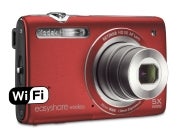
Two new Kodak cameras were announced today, both of which are priced below the $200 mark: the Wi-Fi-enabled Kodak EasyShare M750, which allows users to upload photos directly from the camera and pair up with smartphones via a peer-to-peer connection, and the Playfull Dual hybrid still/video camera, which has some of the best specs we've seen in a pocket camcorder.

Wednesday, January 4, 2012

Kodak shares drop to 48 cents


As Kodak board members abandon ship, renewed bankruptcy rumors sent shares of Rochester's once-mighty Eastman Kodak Company to a new low today.
Shares in photography company Eastman Kodak have tumbled to a new all-time low following a report that the ailing company is getting ready to seek bankruptcy court protection.
The Wall Street Journal said Kodak is preparing for a bankruptcy 11 filing "in the coming weeks" should efforts to sell a trove of digital-imaging patents fall through.
Among the well paid geniuses who ran Kodak into the ground, and the most recent fleeing board member, elite academic Laura D'Andrea Tyson was head of Bill & Hillary Clinton's National Economic Council and 16th Chairman of the White House Council of Economic Advisers.  Amazingly, the teflon Tyson is now on deck for a similar position in the Obama administration.

Professor Tyson